Zero Forex Markup Credit Cards: How They Work and Who Should Get One

What "zero forex markup" actually means
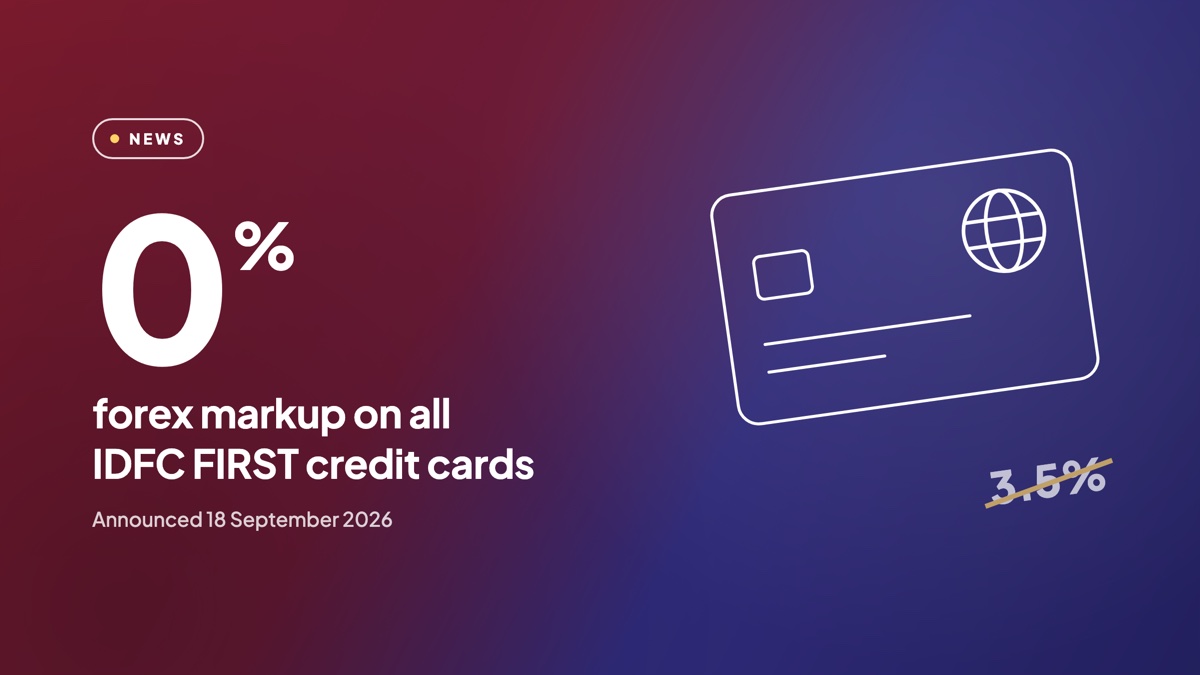
On a normal card, every foreign currency transaction gets a markup added on top of the base exchange rate, typically 1.5% to 3.5%. A zero forex markup card waives that fee entirely: you're charged close to the underlying network exchange rate with no bank margin added on top, so a $100 purchase converts to rupees at close to the actual rate that day, not a marked-up version of it.
How banks can afford to offer this
Zero forex cards aren't charity, the bank usually recovers the cost elsewhere: a higher annual fee, a card positioned specifically for frequent travelers where the forex waiver is the headline feature, or a fintech-issued card that makes its money on interchange volume rather than markup fees. It's worth checking a zero forex card's annual fee and other terms rather than assuming "zero markup" means the card is free to hold.
Working out your own breakeven point
Say a zero-forex card charges a ₹2,000 annual fee that a comparable standard card doesn't. At a typical 2.5% markup difference, you'd need to spend roughly ₹80,000 a year in foreign currency just to recoup that fee gap through markup savings alone, ₹80,000 × 2.5% ≈ ₹2,000. Spend less than that internationally in a year and the standard card, fee included, may actually work out cheaper overall. Spend well above it, frequent travel, regular overseas subscriptions, and the zero-forex card pulls ahead quickly, since every rupee of markup saved past that breakeven point is pure gain.
Who this actually benefits
The savings scale with how much you spend internationally. Someone spending ₹5,00,000 a year in foreign currency, whether through travel, overseas subscriptions, or online shopping on foreign sites, saves roughly ₹8,750 to ₹17,500 a year in markup alone at typical 1.5% to 3.5% rates, before GST. Someone who rarely transacts internationally won't see meaningful savings, and a card chosen purely for its forex waiver might not be the best fit if forex isn't a real part of their spending pattern.
What to check before assuming a card is genuinely zero-markup
Some cards waive markup only above a certain spend threshold, or only on specific transaction types, not universally across every foreign currency charge. Read the specific terms rather than going by the card's marketing name alone, "zero forex" branding doesn't always mean zero forex under every condition.